
Guide
How to market hunting land in Minnesota, Wisconsin and Iowa
Show a distant buyer the access, terrain and price through photos, aerials, film and maps, list it everywhere they search, and answer every lead the same day.
By Jordan Johnson, Founder, Kedron Co.Updated 9 min read

To market hunting land, give a buyer who lives hours away everything they need to decide from home: how they get in, how the ground lays, where deer bed, feed and water, what it costs per acre, and what surrounds it. Then put that package on every site Upper Midwest buyers search, keep it in front of them on social until it sells, and answer every inquiry the same day.
This guide is the hub for marketing land. Each part below links to a deeper guide where one exists.
Who buys hunting land in MN, WI and IA?
Hunters, mostly, and there are a lot of them. Wisconsin sold 790,044 deer hunting privileges for the 2025 season as of Nov. 30 (Wisconsin DNR, Dec. 2025). Minnesota sold 335,711 resident and 14,002 nonresident firearms deer licenses in 2025 (Minnesota DNR 2025 harvest report). Iowa sold 330,944 deer licenses for the 2025–26 season (Iowa DNR deer program report).
Recreational land is a large share of the land business. In the REALTORS Land Institute's national survey, with 453 responses from land professionals, recreational land was 30% of the land respondents sold in 2025, and recreational prices rose 1.9% (RLI 2025 Land Market Survey, April 2026). In southern Minnesota, Wingert Land Services reported in June 2026 that "many hunting and recreational buyers are looking for smaller properties that fit their budget" (Wingert Land Services, June 2026).
What that means for the marketing: the pool is big but spread out. A buyer for an 80 in Buffalo County, Wisconsin, could live in the Twin Cities, Madison or Chicago. That buyer can't walk the property on a Tuesday afternoon. The listing has to do the first showing.
What to settle before the launch
Every fact you put in front of a buyer should be one you can back up. Get these answered before anything is shot or written:
- Boundaries. Know where the lines are and how you know: a survey, a fence the seller trusts, or county parcel data. Parcel lines on a GIS map are approximate. Say so if that's what you're showing.
- Access. Is it frontage on a public road, a deeded easement, or a field road across the neighbor's ground by handshake? Buyers will ask first.
- Enrollments. CRP, Wisconsin Managed Forest Law, Minnesota SFIA or 2c. The buyer may inherit the obligation. A Wisconsin MFL buyer files a transfer report within 30 days and pays a $100 fee (Wis. Stat. 77.88). A CRP buyer who doesn't become the successor within 60 days ends the contract on that land, and the seller owes back payments plus interest and liquidated damages (7 CFR 1410.51). Put the program and enrolled acres in the listing, and send the seller to their FSA office or DNR forester for the details.
- Leases. A farm tenant or a hunting lease changes what a buyer gets the first fall. Know when each one ends.
- Seller permission and schedule. When does the seller or their family hunt it? Which weekends are off limits for a shoot or a showing?
- Trail camera history. Ask for dated photos. Undated buck photos don't prove much, and buyers know it.
Ground photos: what does a buyer need to see?
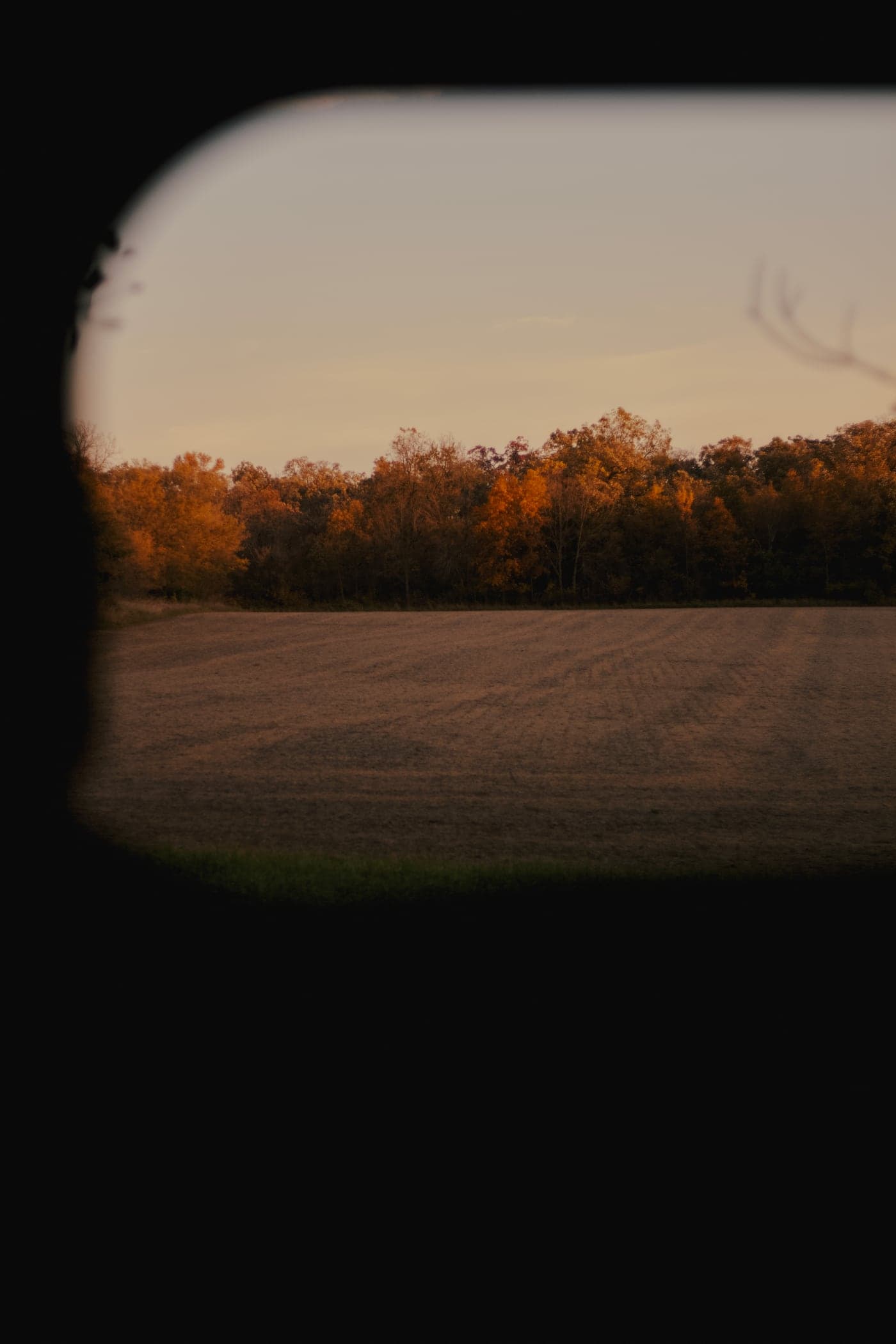
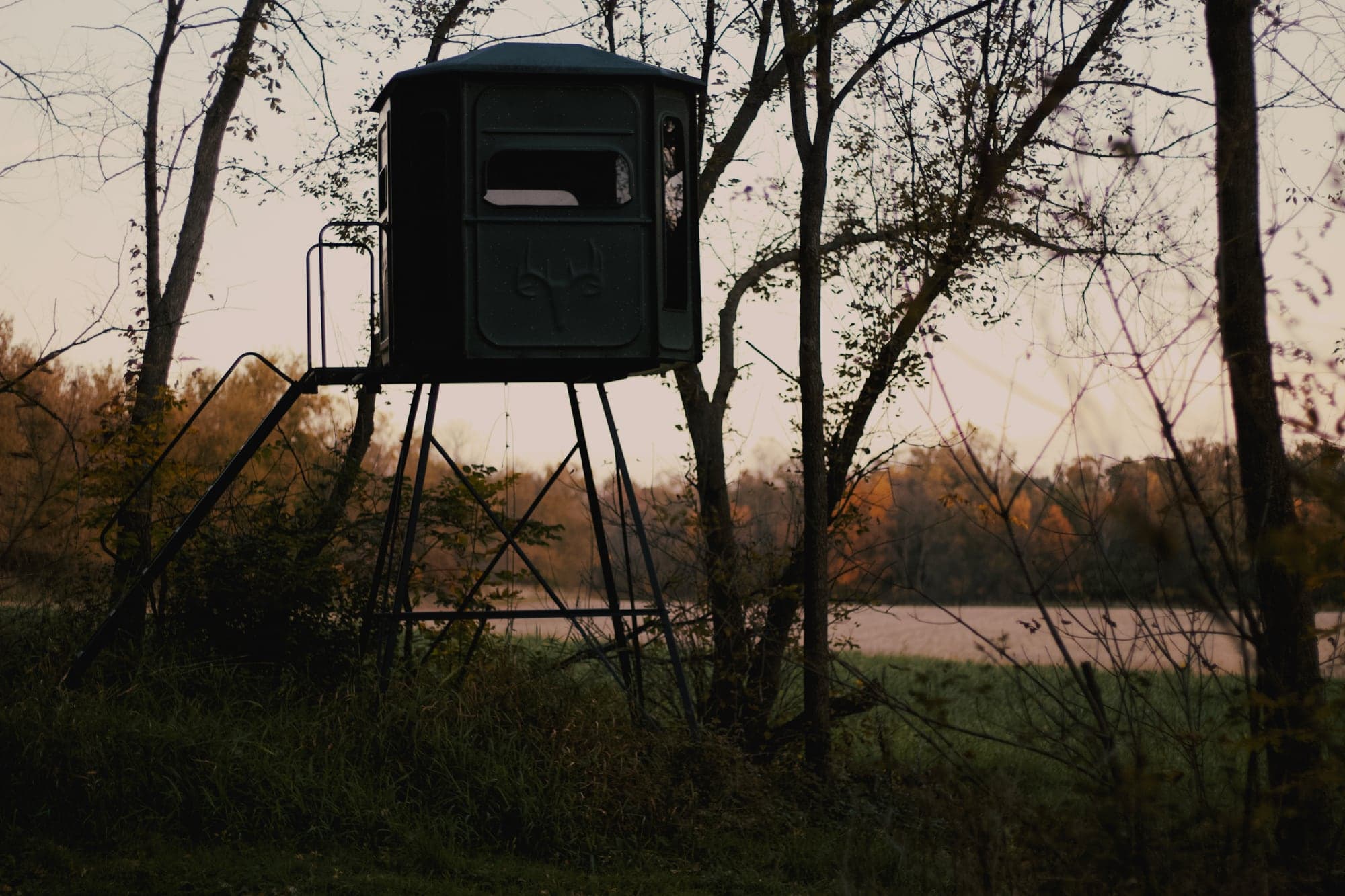
Land.com's listing guide doesn't set a photo count. It says listings "with too few images or unclear photos leave buyers guessing" (Land.com, Anatomy of a Perfect Land Listing, July 2026). The count matters less than the coverage. Shoot the way a buyer would drive in: the road, the entrance or gate, the field approach, then the ground itself. Water, timber, field edges, the ridge or bench where a stand would go, the building site if there is one.
Shoot in low sun, early or late. Midday light flattens timber and washes out a field. The full list, by property type, is in the land listing shot list.
Aerial photos: the parcel in context
From the ground a buyer can't see the shape of 80 acres, where the tillable meets the timber, or what's across the fence. Aerials show all of that: the boundary, the access road, the neighboring ag fields, the public land two sections over.
Any drone flight for a listing is a commercial flight. The FAA names "taking photos to help sell a property" as an example of flying that doesn't count as recreational (FAA, Recreational Flyers). Whoever flies needs a Part 107 remote pilot certificate. Patterns, altitudes and the rest of the rules are in drone photography for land listings.
A film tour: the property in order
Photos show the pieces. A film shows how they connect: that the stand site is 300 yards from the parking spot along a ridge, that the creek crossing is shallow, that the bedding is on the north slope below the bench. A short film that follows the route a hunter would walk answers more questions than 40 photos.
We'd script a hunting land film in this order: access, the lay of the ground, bedding cover, water, food, and what borders it. An FPV drone can carry one continuous shot from the gate, along the trail and under the canopy to the stand. How that works, and the extra rules it brings, are in FPV drone tours for land.
Maps and 3D: let the buyer scout from home
Give a buyer the map they would otherwise draw for themselves: the boundary, the access, stand sites, food plots, bedding, water and trails, all labeled.
Under timber, aerial photos only show treetops. Lidar elevation data shows the ground. The USGS 3D Elevation Program publishes lidar and bare-earth elevation models free and without use restrictions (USGS 3DEP), so a hillshade of the ridges and draws costs nothing but time. A 3D model built from drone photos lets a buyer spin the parcel and see the terrain from any angle. The tradeoffs are in 3D property models for hunting land.
What should the listing copy say?
Lead with use and access, then give the numbers. Land.com's guide asks for "useful, specific information that helps buyers understand how the property fits their intended use" (Land.com). Spend the words on what the photos can't show:
- Total acres, then the split: tillable, wooded, CRP or other enrolled acres, water.
- Price and price per acre.
- Access: road frontage, easement, how you get to the back of the property.
- Taxes and any program the buyer takes on.
- How the seller hunted it, stated as the seller's experience, not a promise.
- The county and township, so a buyer can check it against their own maps.
Don't write "trophy whitetails" unless you can show dated photos. Specifics sell land to hunters. Superlatives make them suspicious.
Where should the listing go?
Put it everywhere a buyer might search: your MLS, your own site, and the land portals. The portals measure their traffic in different ways. Land.com says its network gets "more than 11 million monthly visits" (Land.com Network). LandSearch says it gets "millions of visits per month" and that SimilarWeb (September 2026) estimates it gets more organic search traffic than any other land marketplace (LandSearch, checked October 2026). Both are the companies' own numbers. List on both.
Two rules for syndication. Keep every copy current: price changes and "sold" status go out the same day. And route every inquiry, from every site, into one place you control, so the lead belongs to your firm and not the portal.
Running social until it sells
Launch with the film, then keep going. Cut the film into short clips, post one piece of the property at a time (the creek, the stand site, the view from the ridge), and post again when something changes: a price adjustment, a snowfall that shows the trails, a new trail camera photo from the seller.
Paid ads on Facebook and Instagram come with limits if Meta treats the ad as housing. Meta's developer documentation says Housing ads can't target by ZIP code or gender, keep age open to 18 through 65+, and can't use lookalike audiences (Meta for Developers, Special Ad Categories). It doesn't say whether a land listing counts as housing. Check Meta's current policy for your ad, and plan any campaign so it still works inside those limits.
Follow-up and seller reports
A buyer who asks about a hunting property on Sunday night should hear from you Monday morning, not Thursday. Call back the same day. Ask what they want to do with the land, how they'll pay for it, and when they need to own it by.
Then keep the seller informed. Land.com shows agents each listing's searches, views, emails, flyer downloads and leads, and lets you print or email the report (Land.com). Send the seller those numbers, plus the social results and every showing, every two weeks. A seller who hears nothing starts to think nothing is happening.
How the deer seasons change the plan
Shoots and showings on hunting land have to work around the seller's hunting and everyone else's. The dates move each year, so check each state's DNR page. The 2026 gun seasons:
| State | 2026 gun season | Source |
|---|---|---|
| Minnesota | Statewide firearms opens Nov. 7 (Nov. 7–22 in 100-series areas) | MN DNR |
| Wisconsin | Nine-day gun season, Nov. 21–29 | WI DNR |
| Iowa | Regular gun seasons, Dec. 5–9 and Dec. 12–20 | Iowa DNR 2026 nonresident guide |
Archery runs much longer. The 2026 archery seasons are Sept. 19 to Dec. 31 in Minnesota and Sept. 12, 2026, to Jan. 3, 2027, in Wisconsin. Plan with the seller around all of it:
- Film and photograph before archery opens or after the seller is done. A drone over the timber in early November is the last thing a neighbor on stand wants.
- Leaf-off shows the ground. Late fall and early spring show ridges, draws, trails and rubs. Summer shows food and cover. If you can, shoot both and add the second set later.
- Snow shows trails. A fresh snow is a reason to fly again and post again.
- Tillable follows its own calendar. Farm Progress quotes the view that "the best time to sell farms is outside the growing season" (Farm Progress, Sept. 2024).
The launch, in order
| When | What happens |
|---|---|
| Before signing | Walk the property with the seller. Confirm boundaries, access, enrollments and leases. |
| Week 1 | Ground photos, aerials and film, on a day that works for the seller and the light. |
| Week 2 | Edit the film, build the map or 3D model, write the copy, check every number. |
| Launch day | MLS, portals and your site go live. Film goes out on social. Email your buyer list. |
| Every week | New social post. Every inquiry answered the same day. |
| Every two weeks | Report to the seller: views, leads, showings, what buyers are saying. |
| After a change | Price change or new season footage goes out everywhere the same day. |
Where to start
Pick your next hunting listing and check it against the nine parts above. Fix whatever is missing before launch day, not after the first month of silence. If you'd rather hand off the film, photos, property book and social media assets for a listing, that's what the 3-Day Listing Launch System covers.